Blog

Harrop's Forked Tongues

April 12, 2011
A Big Winter by Rene' Harrop. April 2011.

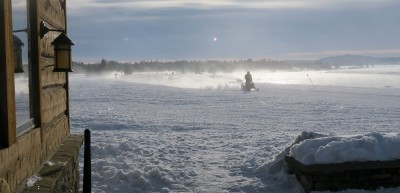
With nearly sixty six years under my belt, I have learned to recognize the value of a winter that arrives early and stays late. With human misery not withstanding, a six month season that builds snow to amazing depth in the high country is a gift to those who prize fishing the Henry's Fork above nearly anything else in life.

Residents who do not evacuate the area with the first hint of frost understand that snow in great abundance is not a villian, and its benefits far exceed the inconvenience of spending half a year in a world of white.

With a snow pack that began to accummulate last October, water experts report precipitation levels at 120% of average in the Henry's Fork drainage as of April 1, and it is still growing. This level is the highest in fourteen years, and it comes on the heels of three consecutive years of adequate winter precipitation. And despite flows averaging from 350-400 cfs for most of the winter, Island Park Reservoir stands at 75% of capacity. It should also be noted that sub-zero temperatures did not appear to have caused the kind of severe icing that has impacted the fishery in some years during the past decade.

With winter flows and temperatures as key factors in determining trout survival, it is logical to assume that the recent upturn in the quality of fishing on the Henry's Fork will continue through the 2011 season. This may also be the year when recruitment from the reconnection to the Buffalo River becomes noticeable in the main stem of the river. Idaho Fish and Game surveys in late May should help to clarify how this Henry's Fork Foundation coordinated project factors into the trout population of the Caldera section of the Henry's Fork.

Also anticipated in the coming months are preliminary results of an HFF study that would determine the feasability of reconnecting Silver Lake in Harriman State Park with the Henry's Fork.

With higher flows during spring runoff a certainty, we are looking forward to conditions that concentrate big browns and rainbows along the edges of the lower river during the Salmon Fly hatch in late May and early June. Locals also work on the assumption that higher spring flows in this area bring heavier hatches of Gray Drakes, and they prepare accordingly.

In low water years, trout are not well dispersed in Harriman State Park until aquatic vegetation begins to mature in early summer. Hatches of Brown and Green Drakes also seem to be especially affected when winter and spring flows are less than ideal. In 2011, the June 15 opening of the Ranch should benefit from an abundance of water that is favorable to both trout and angler as another season gets underway.

While any prediction is largely a matter of guess work, it is impossible to not recall 1997 which is the last time we have seen such generous precipitation in the Henry's Fork Basin. And while reluctant to forecast a similar result with respect to a momentous spike in trout population and an amzing five year span of fishing that followed the winter of 1997, it will be interesting to see if such history is repeated in 2011.

Though most signs are positive looking forward, there is one item affecting the future of the Henry's Fork that is not being celebrated as good news. After nine years of serving as Executive Director, Steve Trafton is leaving the Henry's Fork Foundation to accept a position with Trout Unlimited in Washington D.C.

The list of Steve's accomplishments on behalf of the river is far too long to list at this time, and his leadership will be sorely missed. I wish him well in his new position and offer my personal thanks for all he has done to protect the values we hold dear. He will be hard to replace. 
 
October 15, 2010
Revival - Chapter II

The mood of the Henry’s Fork community in May of 2010 was one of cautious expectation and optimism. With a new season directly ahead all visible signs were positive with regard to the health of the fishery.
2009 had ended on an amazingly favorable note with hatches and the resultant fishing opportunity being unanimously declared as being the best in more than a decade by locals and visitors alike. With Island Park reservoir at nearly 60% of capacity in early November, hopes for a repeat of the favorable winter flows of the previous year were realized as December arrived and releases from the dam reached 400 cfs.
For several decades, scientists had become convinced that adequate winter flows were the most critical factor in juvenile trout survival on the Henry’s Fork. With cooperation secured from irrigation interests by the Henry’s Fork Foundation, winter flows from earlier in the decade which were far short of optimal were gradually improved as more normal weather patterns began to replace several years of severe draught.

The revival of the Henry’s Fork fishery in 2009 was the result of three consecutive years of off season flows which allowed increased numbers of young rainbows to endure the harsh Island Park winter. The consistent release of 350-400 cfs this past winter were the best we had seen since 1997, and anticipation of another successful year ran high among Henry’s Fork outfitters and guides. But as spring drew near, it became apparent that diminished snow fall from early January through most of March had left the mountain snowpack at an alarmingly low level.

Despite general optimism for the immediate season, a cloud of gloom crept over the fishing community as concern for future winter flows began to mount. A continuation of dry weather extending through summer would assure severe draw down of the reservoir and the subsequent end of a positive trend in fish saving flows in the critical months that would follow.

In most years, a six to eight week period of near constant rain and below average temperatures would sour the disposition of any angler especially when it occurs at the beginning of a long awaited spring. But to we who depend upon the Henry’s Fork fishery for our existence, the soaking rains and snow preserving temperatures were a source of tremendous relief. By late May, the snowpack had reached normal levels and the farmlands of the lower valley were thoroughly saturated. And while two more weeks of unusually cool and wet weather provided extra insurance pertaining to water supply, it came at a price.

Losing nearly the entire Salmon Fly hatch in late May and early June was costly to Island Park businesses that rely on visiting anglers to stay afloat.A restless lot by nature, the river guides became especially grumpy as foul weather kept them confined indoors as the opening of the Ranch drew near. But as the skies cleared and temperatures reached more seasonable levels, it was as though a flood gate of bounteous hatches and rising trout had been released.

Almost overnight, fishing on the entire river from Island ParkDamtoSt.Anthony sprung to life with water conditions that were ideal and weather ideally suited for wading or floating the Henry’s Fork. While somewhatdelayed the Gray, Green, and Brown Drakes produced consistent fishing for large trout from mid June through early July. Golden Stones followed on the heels of the big mayflies and hatched simultaneously with theFlavs until the second week in August.
Numerous caddis hatches joined March Browns, PMDs, Callibaetis and Tricos to provide the kind of consistency that can only happen on a truly healthy river. 

Hopper fishing from mid August through an unusually pleasantSeptember was even better than 2009 which everyone agreed as exceptional.

The warm weather of mid summer through early autumn was especiallyfavorable for the smallerterrestrials. Winged Ants in size 14-20 were a daily feature for more than two months. And despite their relatively small size some of the largest trout of the season were taken on this favored trout food. Beetles run strong competition with ants for the trout’s attention, and they were a daily feature during the period when land based insects dominate on the water.

While October was greeted with summerlike temperatures, a shift to weather more favorable to fall hatches occurred by the end of the first week. Baetis and Mahogany duns are now the main attraction as the end of another season draws near. Walking the open banks brings a feeling of amazement and gratitude as one considers the revival of life so strongly incontrast to what was observed only a few years ago. Trout of all age classes are visible in the clear flows as they feed leisurely amid luxurious aquatic vegetation that had been devastated during the draught years.

With Island Park Reservoir approaching 50% of capacity, the prospect forcontinued favorable winter flows looks very good. This bodes extremely well for the fishery downstream of the dam which fisheries professionals estimate increased by 40% in 2010. And while a similar increase can not be assured, it is reasonably safe to assume that the positive trend of the past three years will continue into 2011. The future of the Henry’s Fork looks very bright.
 
February 4, 2010
by René Harrop
 
It was with guarded optimism that we entered the 2009 fishing season on the Henry’s Fork. Adequate winter flows and relatively mild temperatures are typically considered a recipe for strong hatches and healthy trout populations. With both components in place it was somewhat surprising when March baetis and midge activity failed to meet the expectations of most who frequent the lower river during the off season.

Early April saw minor improvement in surface activity but streamers and nymphs continued to be the most effective means of stirring interest in the sullen browns and rainbows. Of course, neither are offensive methods but the time comes when the yearning for rising trout and the finesse of a four weight rod can subdue my enthusiasm for even the best days of fishing subsurface flies.

With the approach of May it seemed that nature had taken pity on the lamentation of a frustrated dry fly man. Almost overnight it appeared as though the flood gates of every early spring hatch had sprung open releasing almost more aquatic insect life than could be handled. Midges and baetis became a daily occurrence and were quickly joined by March Browns and some of the best early caddis fishing in recent memory. And this was just the beginning.

Cool but pleasant weather kept water levels reasonably stable and clear. With the March Brown hatch extending beyond its usual appearance and caddis in abundance, the trout continued to look upward for smaller food sources until the third week in May. But as water levels began a modest trend upward trout began to shift their focus to a larger fare.

By the opening of general season and the blooming of choke cherries at the end of May all eyes were on the fast water sections of the lower ‘Fork. It was salmon fly time and conditions were perfect for these 2 to 3 inch long flies that drive trout crazy.

With perfect water levels and just enough color to allow them to relax, nearly every big trout from Warm River to below Vernon Bridge seemed to be stacked along the edges gorging themselves on salmon fly nymphs and adults. At about ten days in duration, the salmon fly emergence was comparatively brief but the action and exceptional size of the fish on most days was more than adequate compensation for a shorter hatch. As the salmon fly emergence progressed upstream to its termination point at Box Canyon, the lower ‘Fork began a rather seamless transition into the slightly smaller golden stones. While less concentrated than their larger cousins, the goldens would provide action until late July from Island Park Dam to the water below St. Anthony.

Early season on Henry’s Lake competes for attention through the first two weeks of June and most of the TroutHunter folks succumbed to the fast fishing that usually accompanies the opening of this great still water fishery. Days of 20 or more fish were not uncommon and the average size would probably exceed 18 inches.

Strong hatches of March Brown, Baetis, PMDs, and caddis greeted the opening of Harriman Ranch on June 15. And despite unusually good fishing, only a couple of dozen vehicles occupied the upper parking lot during the usually busy opener. But the best news was yet to come.

Green Drakes, the hatch of legend on the Henry’s Fork had made only fleeting appearances during the draught years following the turn of the new century. In 2009, however, anglers were treated to more than two weeks of exceptional Green Drake fishing with the hatch in the Ranch being as strong as anywhere on the river. With Brown Drakes and Flavs making a similar showing, it was hard to look anywhere else until well into July.

In keeping with favorable water flows, Green and Gray Drakes, Flavs, and caddis kept things interesting on the lower river from mid June through early July.

With temperatures cooler than average, the Henry’s Fork did not succumb to the usual dog days of July and August. Summer hatches of PMDs, Callibaetis, Tricos, and caddis continued to provide reliable fishing with little weather related interruption. Hoppers, Beetles, and winged ants were in abundance on warmer days with many of the year’s best fish falling victim to these tempting terrestrials.

September brought some of the most pleasant weather of the season. And while warmer than normal conditions seemed to hinder the appearance of baetis and mahogany duns, an extension of summer mayflies and caddis compensated for the early scarcity of typical September hatches. Terrestrials also contributed later into the season than is usual.

Any concerns for the cool weather hatches were quickly alleviated with the arrival of October. Weather conditions more typical of November would often test the resolve of even the most determined fly fisher, but there was no shortage of available trout. Baetis hatches were consistent on all but the coldest of days and mahoganies were abundant when conditions were more typical of the season.

As has become the habit in recent years, Henry’s Lake again begins to assert its influence in October. Henry’s Fork guides and others who call Idaho home seem helpless against the attracting force of big cutthroat, hybrid, and brook trout when the approach of winter brings an urgency into their feeding behavior. And the hardy souls who braved the elements last fall were not disappointed. Henry’s Lake continued to fish as well in 2009 as many can remember and there is no indication that this will change anytime soon.
           
In November, the Henry’s Fork seems all but devoid of local anglers who have the river essentially to themselves. Baetis and midge fishing continue to provide plenty of top water action, but a different game comes into the picture as the season nears its end.

With big brown trout as the objective, streamer fishing on the lower river becomes almost an obsession. And while the number of trout hooked was seldom spectacular, the size of the browns in the fall of 2009 was as impressive as I have ever seen.

In summary, my reflections of 2009 center on two defining characteristics of a very memorable year. Exceptional hatches and abundant trout of unusual size are the derivative of nature’s beneficial touch, and we should all be grateful.
 
René Harrop

 
July 29, 2009
"Drake Withdrawl" by René Harrop

While easy fishing is seldom associated with the Henry’s Fork, a month long period beginning in mid June produced something that came pretty close.

Green, Brown, and Gray Drakes are all size twelve or larger and the effect they have on trout is quite different than the usual insect fare on the Henry’s Fork. The appearance of any one of the three is an event to be savored but when they are hatching simultaneously, it can be almost more than one can bear.

Green Drakes are mostly a morning affair while Brown Drakes usually appear at around dusk. When combined with the Gray variety that can be found from late morning until dark, this impressive trio represents as much as a twelve hour window of what can seem almost suicidal behavior on the part of the trout.

For angler and river guide alike, the days become a frantic scramble from one location to another, and the distance between hot spots vary as much as forty miles. Deserving or otherwise, everyone seems to be catching trout of a size that normally would be considered an impressive accomplishment by even the most experienced veteran. Forgotten are the days when anything short of perfection in tackle or talent is met with utter distain by the snooty rainbows and browns of the upper and lower Henry’s Fork. Reality has a way of coming around, however, and that is where we are right now.

It is amazing how small a size 14 Flav or Callibaetis can seem when you have become accustomed to fishing flies that are several sizes larger. PMDs in size 18 and the even smaller Tricos become almost invisible while abrupt adjustments are forced upon Drake spoiled anglers. But the river is much quieter now, and the big trout are still there.

Most of those whom only a few days ago, were celebrating the bounty of the Henry’s Fork are now off chasing Golden Stones and Salmon Flies on the Madison or Yellowstone. And while fishing here has resumed its normal demanding ways, it is still a fine time to be on the river. Hunting big trout along the open banks is now less likely to be disturbed by human competition, and the quiet is undoubtedly enjoyed equally by both angler and trout. Maybe I don’t miss the Drakes so much after all.
 

Stream Flows
  • HENRY'S FORK below I.P. Reservoir
  • Flow (cfs): 531
  • HENRY'S FORK below Ashton Dam
  • Flow (cfs): Ice
  • HENRY'S FORK at St. Anthony
  • Flow (cfs): Ice
  • FALLS RIVER NEAR Chester
  • Flow (cfs): Ice
  • MADISON below Hebgen Lake
  • Flow (cfs): 1150
    Temperature (°F): 36.5
Join Our Mailing List
Email: